
Cherokee County VINELink Coverage
Georgia VINE is the state custody-status and notification service available through VINELink. The Cherokee Sheriff’s Jail List links to it as “VINE-Victim Notification,” making it an official adjacent channel for a person connected to the Adult Detention Center. Georgia VINE can carry records from participating local and state custody feeds. Coverage and update timing depend on the agency that supplies the record, so the service should be read as a live notification source rather than as a complete archive.
VINELink performs two focused tasks. First, it lets a user look for one person and review the custody information supplied for that match. Second, it lets a user register for available notifications tied to that record, such as release, transfer, or another custody change. It is not the Cherokee court docket, a certified jail booking jacket, a GDC sentence computation, or a public list of everyone released.
The official Georgia VINE information page identifies the state service and support route.

This state information source helps confirm that the service is the notification layer, while each participating agency remains the source of its custody data.
Search Cherokee Inmate on VINELink
Open the Georgia state service and search for the specific person. Use the fullest name and an ID when one is known. Common names may return more than one possible record, and spelling differences can hide the right match. Compare the facility, identifier, and other available details before opening a record or registering a contact method. Never attach an alert to a name alone when the identifying information does not fit.
- Open the Georgia VINE state page.
- Choose the offender or person custody search offered by the live application.
- Enter the name or known identifier and review all likely matches.
- Compare the available identifying and facility details carefully.
- Open the matching record and read its current custody status.
- If a release or no-longer-in-custody notation appears, confirm exact details with the source agency.
The Georgia state application is dynamic, so button names and result labels may change. The official Georgia VINE screen shows the custody-change route without making one temporary interface label part of the record.

Use the matching person record, not the state landing screen, when registering for an alert.
Cherokee VINELink Release Fields
VINELink displays only the data made available through the participating feed and live application. A local jail record and a state custody record may not show the same details. The participating agency may supply the categories below, but Georgia VINE does not promise one fixed phrase for every released result. A result may use a release or no-longer-in-custody notation when the agency provides it.
| Field or result | How to read it |
|---|---|
| Name or offender identity | Confirms which person record is open; compare other details |
| Offender or record ID | Helps separate similar names when supplied |
| Custody status | Shows the status reported by the participating agency |
| Facility or location | Identifies the reporting custodian when supplied |
| Release notation | May show a custody change, released status, or no-longer-in-custody status |
| Notification options | Lists contact methods offered for that record |
A released status is narrower than a full release record. It does not necessarily show the legal reason, exact processing time, bond terms, transfer documents, or later court disposition. “Released from Cherokee custody” may also mean another agency received the person. Use the sheriff release sheet or next custodian when that distinction matters.
Note: Read only the fields actually shown for the matched record because participating agency feeds can differ in scope and timing.
Register Cherokee Release Notifications
Registration begins inside the matching person’s VINE record. Available methods can include phone, email, text, app, or other options shown by the Georgia service. Choose only methods displayed in the live interface. A phone alert may require a personal identification number, or PIN, to confirm receipt and stop repeat calls. Save that PIN somewhere private and accessible.
- Search for the person and open the confirmed matching record.
- Select the registration or notification option for custody changes.
- Choose one or more contact methods offered on that record.
- Enter the phone number, email, or other requested contact detail.
- Create or confirm a PIN when the phone-notification process asks for one.
- Complete the registration and retain its confirmation details.
- Return to update the registration if a contact method changes.
A notice may report release, transfer, or another status change according to the participating feed. Read the notice wording closely. Transfer is not the same as release into the community. If the notice is urgent or unclear, use the agency and facility shown in the record as the first confirmation contact.
Georgia VINE lists phone support at 1-833-216-6670. Support can address use of the service, while the sheriff, GDC, court, or other custodian answers questions about the underlying record.
Keep more than one current contact method when the live registration screen permits it. A changed phone number or blocked email can prevent a notice from reaching the registrant even though the custody feed updated. After saving the PIN, record which person and agency entry the registration follows. If the matching record later moves from the Cherokee jail to GDC or another custodian, review the new status and notification choices instead of assuming the original local registration follows every later system.
Cherokee VINELink Fallback Channels
Cherokee’s official access channels provide the local fallback when a VINELink result is missing, delayed, or unclear. The Jail List is the first comparison for someone recently held at the Adult Detention Center. It confirms current-list fields such as inmate ID, booking ID, name, booking date, and arresting agency. If VINELink and the current list disagree, neither source should be forced to answer what it does not show.
Next, search the Cherokee court docket for bond, sentence, dismissal, probation, commitment, or revocation entries. The docket may explain why custody changed, although the online view is not the complete clerk file. Sheriff Records supplies the booking and release sheet when exact local release time, reason, hold entry, or transfer destination is needed. This county-specific sequence is more reliable than treating a missed VINE result as final.
The Cherokee current Jail List is the local custody comparison source.
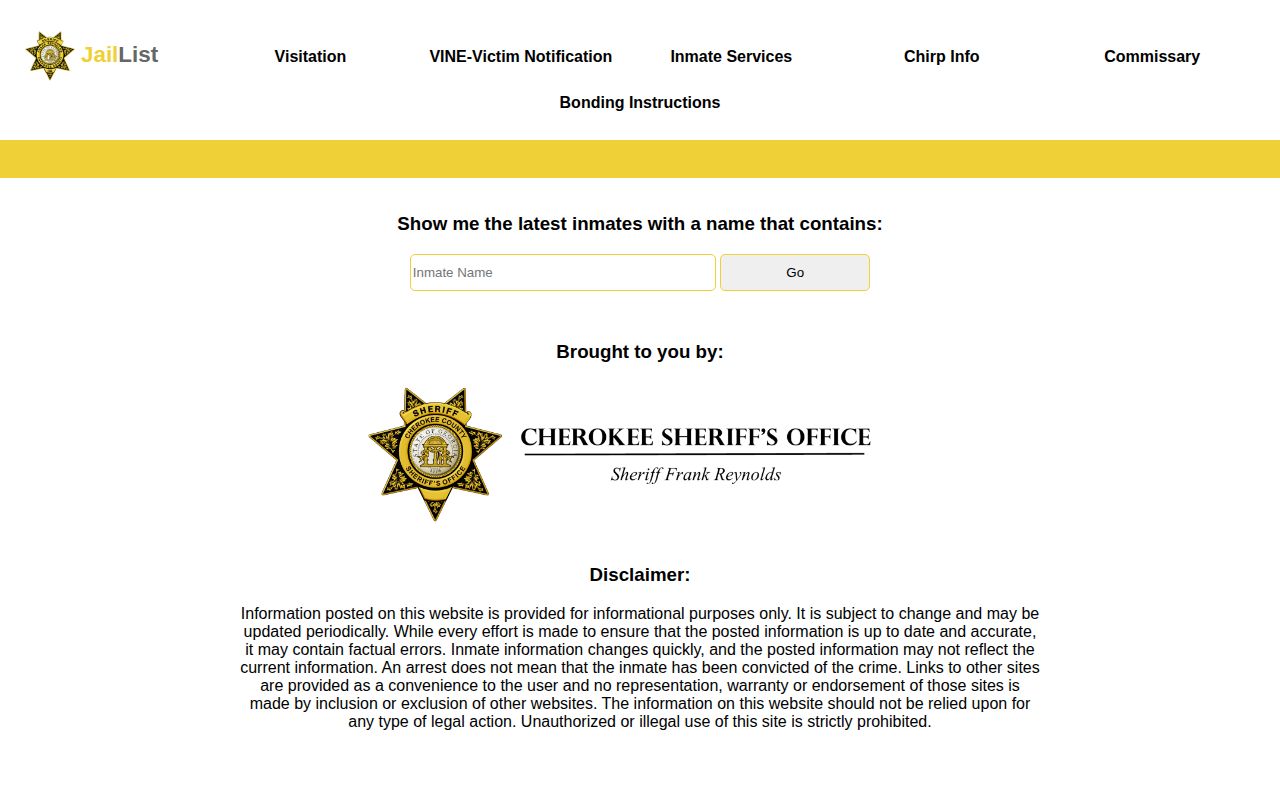
The roster tells whether the person is currently listed locally; VINELink adds custody-change and notification functions when the participating record is available.
Cherokee State Release Checks
A Cherokee County case can lead to a state-prison commitment. In that situation, disappearance from the county jail is a transfer, not a release from incarceration. Georgia VINE may carry participating state custody information, but the Georgia Department of Corrections offender search is the direct state-prison route. GDC says Find an Offender can provide facility location, charges, and release-date information for its records.
Do not confuse a custody alert with parole timing. The State Board of Pardons and Paroles uses Tentative Parole Month, or TPM, for the month of final review. A TPM is not a guaranteed release date and may change. After an actual parole release, the Board’s parolee search and the Department of Community Supervision become the relevant public paths. VINELink remains a notice source rather than the authority that computes the sentence or grants parole.
GDC also warns that its information should be verified with Inmate Records and Information before assumptions are made about completeness. When the state date and county court papers conflict, the sentencing documents and jail-time credit may need review through the clerk and GDC channels.
- Custody alert
- A notice that the participating agency reported a status change.
- Transfer
- A move into another custodian’s control, not community release.
- TPM
- A tentative month for parole review, not a final release date.
- Release sheet
- The jail record documenting when and how local custody ended.
Cherokee VINELink Release Limits
VINELink does not cover every custody system. It is not the BOP Inmate Locator for sentenced federal prisoners, the U.S. Marshals custody path for many federal pretrial detainees, or the ICE Online Detainee Locator System. A person can have a Cherokee jail connection and later enter one of those systems. Search the system indicated by the court, hold, or transfer record instead of relying on Georgia VINE alone.
Data can also lag. A release may be processed before a participating feed updates, or a VINE status may change before the court docket posts its explanation. A missing record can result from coverage, timing, spelling, identity, or custody type. It should never be translated automatically into “released.”
The general VINELink route can be used if the state application redirects or the user needs to enter Georgia again.
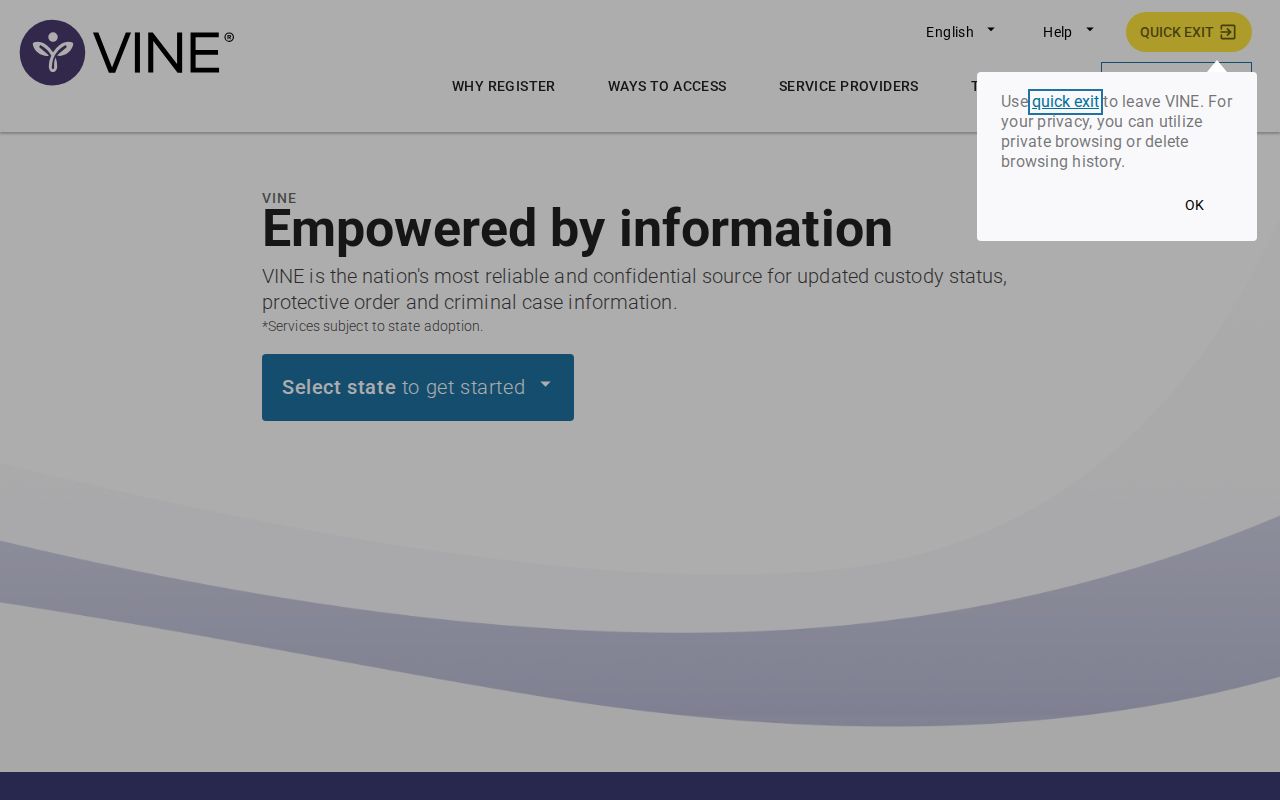
This route returns the user to the service, but it does not expand Georgia coverage or replace the agency that created the custody record.
Confirm Cherokee VINELink Results
When VINELink reports a change, save the person identifier, facility, status wording, and notice time. Then choose the source that can prove the requested fact. Sheriff Records can provide the county release sheet. The Cherokee Clerk docket can provide the bond, sentence, dismissal, probation, or commitment order. GDC controls state-prison information, and the Board and DCS control parole decision and supervision records.
A full named-person custody path is available through the Cherokee County released inmate search. For the VINELink task, stay with one matched record, maintain the notification registration, and use source documents only when the alert leaves a question about the reason, exact time, destination, or later supervision.
That division keeps each tool in its proper role. VINELink tells the registrant that a participating record changed. The originating office explains and certifies what happened.
Note: Preserve the exact alert wording because “released,” “transferred,” and “not in custody” can lead to different confirmation paths.