
Cherokee Court Release Records
A release does not erase or close the court case. The Cherokee jail’s booking record documents physical custody, while the court file supplies the legal explanation. It can show a bond decision, sentence, credit for time served, probation order, dismissal, commitment to GDC, revocation, or final disposition. That record often lasts after the person disappears from the current Jail List.
The court file is especially useful when “released” is unclear. Bond means the person left jail while the case continued. Time served means confinement already completed was credited toward the sentence. Probation allows service of a sentence in the community under stated terms. A commitment order can explain why a person left the county jail but remained incarcerated in the state system. Court facts and jail facts should be read together.
| Record | What it can explain |
|---|---|
| Bail or bond order | Authority and conditions for release before case completion |
| Sentence order | County time, state time, probation, and credit stated by the court |
| Commitment order | Transfer from local jail into GDC custody |
| Dismissal or nolle prosequi | Why prosecution did not continue on the listed count |
| Revocation order | Why release or supervision status changed later |
| Final disposition | The court’s result, separate from the date physical custody ended |
Cherokee Release Court Routes
Cherokee’s court structure assigns different duties to Magistrate, State, and Superior Court. Magistrate Court handles initial appearance and bail hearings for every person booked into the Adult Detention Center. That includes after-hours hearings handled through the court’s judge process. A same-day release may therefore begin with a Magistrate bond event even though the later case proceeds in another court.
State Court processes misdemeanor and traffic criminal cases filed with the clerk. Superior Court has general jurisdiction and handles felony cases. Charge level and later prosecution determine where the durable docket develops. A person can have entries in more than one court as the matter moves from first appearance into prosecution. Searching only the court that set the first bond can miss the final sentence or disposition.
The official Cherokee Magistrate Court page documents its role in initial appearance and bail.
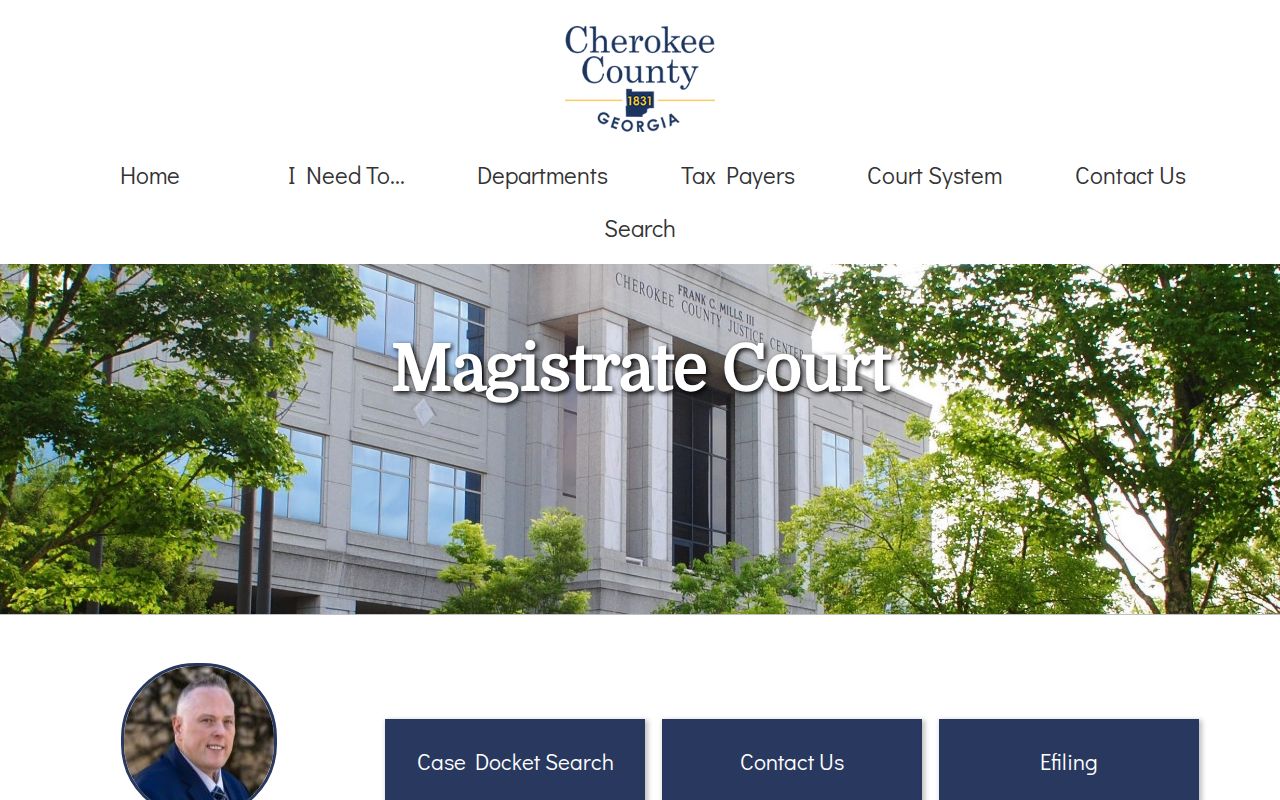
This source helps identify the first release decision, while the clerk docket and later trial-court file show how the case continued.
- Initial appearance
- The first court review after arrest, including key custody and bail issues.
- Disposition
- The recorded result of a charge or case.
- Commitment
- A court order placing a sentenced person in a corrections system.
- Revocation
- A court action ending or changing release or supervision after a violation finding.
Search Cherokee Release Dockets
The Cherokee Clerk case search accepts case number, party name, and CSE number. The clerk says the plus button beside a case number opens the docket. Public entries can show parties, dates, judge assignment, and the overall posture of a case. Use the full legal name and try reasonable name forms. A case number is the best tie between the jail booking, bond document, and later court action.
A good search sequence works from the custody event toward the court result.
- Save the booking ID, booking date, arresting agency, and charges from any known jail record.
- Search the clerk portal by party name, then confirm identity through case details.
- Open the docket and look for bond, sentence, dismissal, probation, commitment, or revocation entries.
- Identify whether the matter belongs to Magistrate, State, or Superior Court.
- Request the complete file when the online entry lacks the signed order or newest action.
The online search is a convenience, not the complete official file. The clerk warns that anyone who needs the most current or complete record should contact the Clerk of Court’s Offices for authenticity. A docket label can point to an order, but the signed document gives its terms. Certified copies must come through the clerk’s copy process rather than from a screen capture.
Cherokee Release File Requests
The Frank C. Mills III Justice Center is the local complete-file point identified by the clerk. The case-search page lists weekday hours from 8:30 a.m. to 5 p.m. and says a full file may be requested there. Search support is listed at 678-714-8778. State Court also lists 678-493-6475. Contact the clerk that maintains the case rather than the jail when the needed item is a signed bond order, sentence, disposition, or court-certified copy.
Frank C. Mills III Justice Center
90 North Street
Canton, GA 30114
Case-search support: 678-714-8778
State Court: 678-493-6475
Complete-file hours: Monday-Friday, 8:30 a.m.-5 p.m.
Describe the request with the person’s full name, case number, court, and exact document. For example, request the signed bond order, sentencing order, commitment order, probation order, revocation order, or final disposition. If the jail release time is also needed, make a separate sheriff records request for the booking and release sheet. One office cannot certify the other office’s record.
The Superior Court Clerk’s Office provides the felony and complete-file context. Its official source capture identifies the office that keeps the court record after a person leaves the jail.
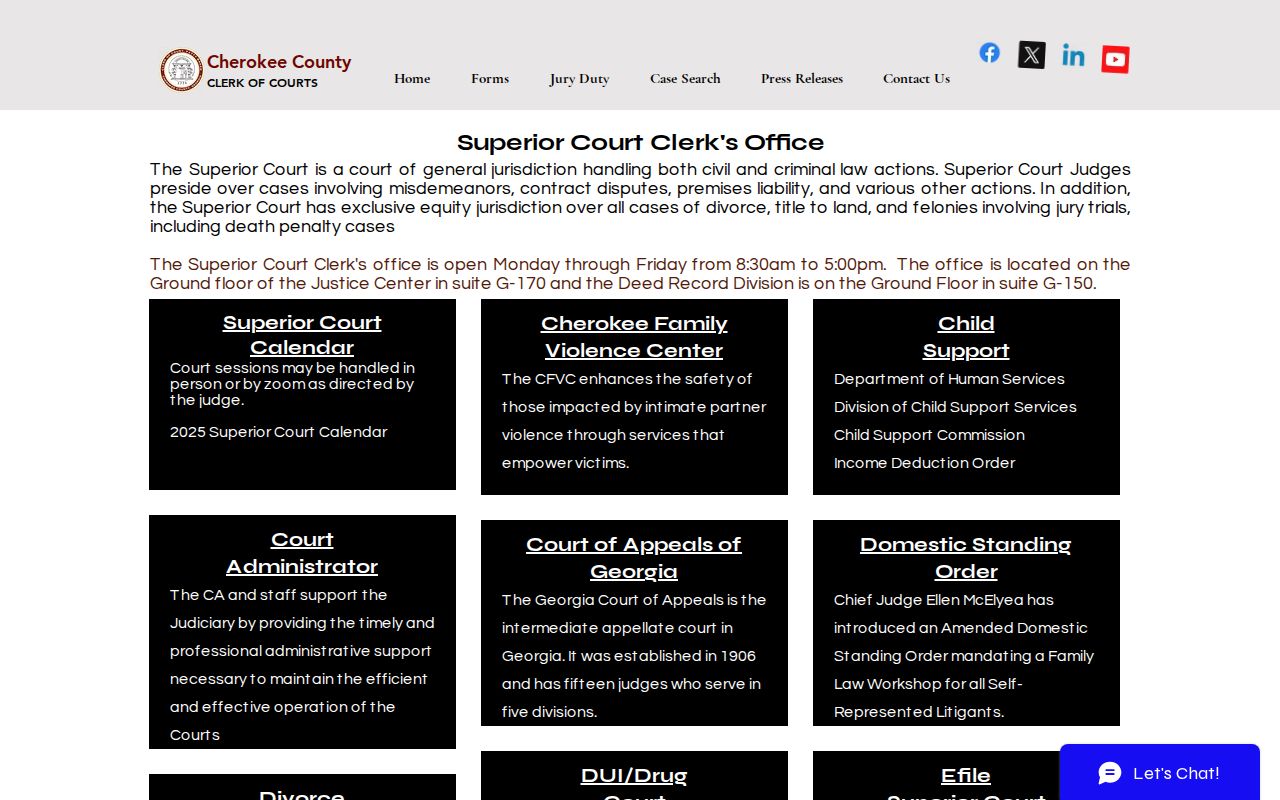
For felony matters, the clerk file can connect the original Cherokee booking to sentence, GDC commitment, or a later disposition.
Note: Ask for the signed document behind a docket label when its exact conditions, sentence terms, or custody direction matter.
Cherokee Bond Release Orders
Bond is one of the most common reasons a person leaves the Adult Detention Center before the case ends. The court sets the bond and conditions. The sheriff administers the payment and jail release. Cherokee’s bond page describes cash, online card, professional bondsman, property, and approved out-of-county property bond routes. The $20 state-required fee is separate from the bond amount, and online or private-company routes can have added charges.
A bond order and a release entry answer different parts of the same event. The court order authorizes release under stated terms. The jail record shows the date and time processing ended. If the Jail List no longer shows the person, do not treat that absence as proof that every condition was met or the case was resolved. Open the docket and follow future dates and orders.
Magistrate Court can set early bail after booking. State or Superior Court may later address conditions as the case proceeds. A bond can also be delayed by another hold. That is why a court authorization does not always match the moment a person walks out or transfers to another agency.
The Cherokee State Court page confirms its misdemeanor and traffic criminal jurisdiction.
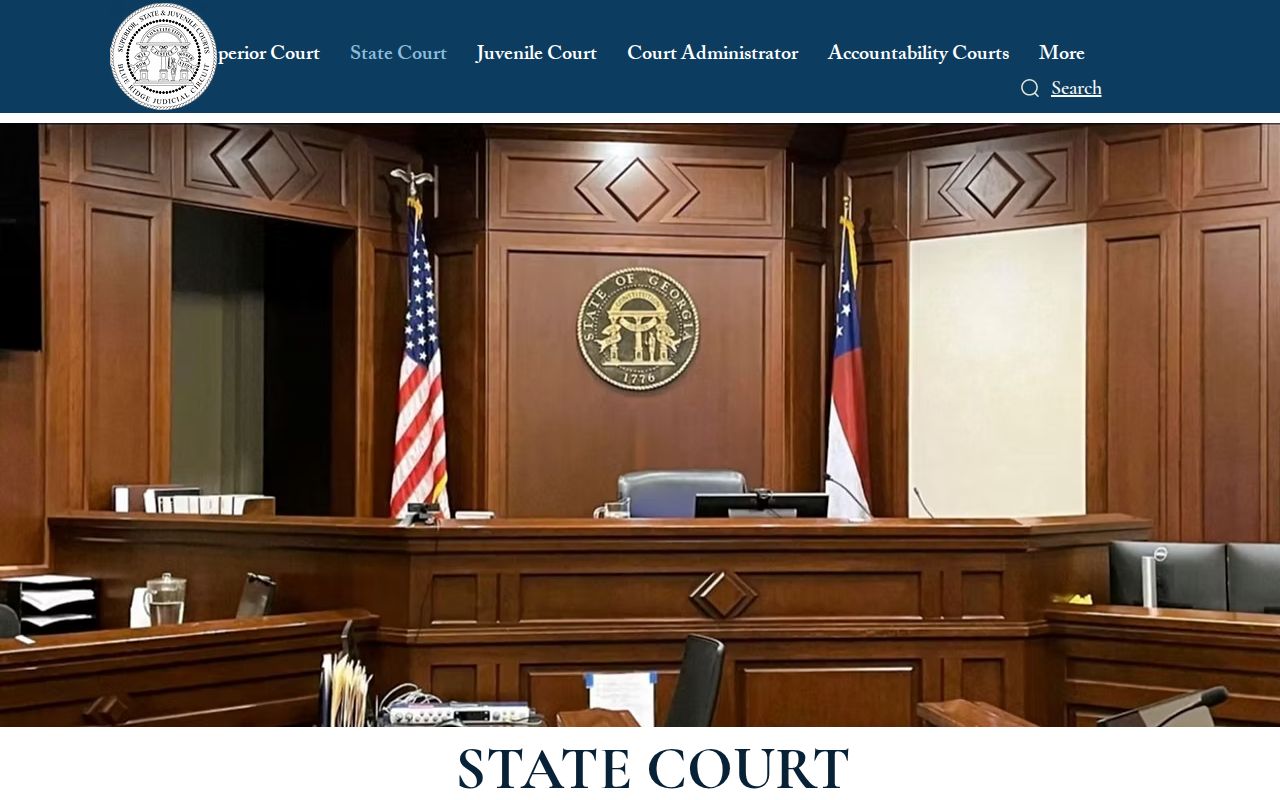
That division helps route misdemeanor follow-up after initial appearance and release from the jail.
Cherokee Sentence Release Records
A sentence can end local custody in several ways. A time-served order credits confinement already completed. A county sentence may end after its lawful term less earned-time allowances under Georgia law. A probation sentence can move the person into community supervision. A state-prison sentence creates a commitment to GDC, meaning departure from the Cherokee jail is a transfer rather than release from incarceration.
Use the signed sentencing and commitment documents to identify the path. If GDC receives the person, the state offender search is the next source for prison location and release-date information. If parole later occurs, the State Board of Pardons and Paroles controls the decision and DCS supervises the person in the community. For local misdemeanor probation, Cherokee Probation Services and the court order are the relevant pair.
Court entries can also document dismissal, nolle prosequi, or sentence completion. Those terms do not all mean the same thing. A dismissal ends a charge in the form then before the court. Nolle prosequi records a prosecutor’s decision not to proceed on a charge. Sentence completion means the imposed term was served or otherwise completed. The jail release sheet should still be used for the physical custody date.
The Cherokee County release records overview shows when to move from a court result to the jail, GDC, parole, VINE, BOP, or ICE system.
Cherokee Detainer Release Orders
A court may authorize release while a separate hold keeps the person in custody. The sheriff’s Warrants & Civil Unit places and releases holds with other agencies and handles felony extradition work. The court docket may reveal a bond or sentence result, but the sheriff hold record and receiving-agency record explain why community release did not follow at once.
Immigration transfers require the same care. Cherokee’s Immigration and Nationality Act page discusses local intake, quarterly reporting, and detainer procedures under Georgia’s 2024 framework. That page does not decide or publish a person’s immigration case. If the local record shows an ICE handoff, use the official federal detainee locator and ask for releasable Cherokee transfer entries.
A precise statement is “released from Cherokee County custody” when only the county event is confirmed. Do not broaden it to release from all custody without checking the receiving system. This wording preserves the distinction between a court order, the jail’s departure entry, and the next agency’s control.
Note: A court release order can coexist with another agency’s hold, so confirm both physical departure and the receiving custodian.
Cherokee Restricted Court Records
Georgia record restriction is not the same as release or dismissal. Cherokee’s sheriff page explains O.C.G.A. § 35-3-37 procedures for certain criminal history records, split between arrests before and after July 1, 2013. For newer arrests, a prosecutor may approve restriction at sentencing and sentence-completion approval may be included in documents sent to the court. That makes the court file an important place to look for the actual action.
Restriction should not be described as deleting every record. A court docket, jail entry, or other source may be governed by different access and retention rules, and the sheriff warns that information can remain outside GCIC control. Ask the clerk what court record is available and use the local restriction process for the criminal-history action itself.
Release research and restriction research therefore answer separate questions. The first asks how and when custody ended. The second asks whether access to eligible criminal-history information was limited through the legal process. Neither answer should be inferred from a missing online search result.