
Cherokee Projected Versus Actual Release
A projected date is an estimate or scheduled point based on the record as it stands. An actual release date records when custody ended. The distinction is vital in Cherokee County because a court order, jail credit, earned time, disciplinary event, detainer, or parole decision can alter the path. A date shown today may move before the person leaves custody.
Pretrial detainees generally have no sentence end date. Their departure depends on bond, a court order, dismissal, disposition, transfer, or another legal event. A sentenced county inmate may have a release calculation held by the jail. A sentenced state prisoner has a GDC computation. Parole timing belongs to the State Board of Pardons and Paroles.
| Term | Meaning | Controlling source |
|---|---|---|
| County sentence expiration | End of a county term after lawful credits and changes. | Sheriff jail record and sentencing court |
| Maximum Release Date (MRD) | GDC sentence-computation endpoint. | Georgia Department of Corrections |
| Tentative Parole Month (TPM) | Month for Board final review, not a promised release date. | State Board of Pardons and Paroles |
| Actual release date | Date custody truly ended in that system. | Agency that released the person |
Find Cherokee County Release Dates
Start with the sentence, not a broad inmate search. Cherokee’s current Jail List is useful for present county custody, but the public pages do not publish a future release-date calculator. The Cherokee court docket can show the sentence, jail-time credit, later amendments, or whether the case instead led to probation or a state prison commitment. That first classification decides the next source.
- Check the Cherokee court docket to determine whether the person is pretrial, serving county time, or committed to GDC.
- For county time, contact the Cherokee Sheriff’s jail records channel and ask for the current sentence-expiration or projected-release information that is releasable.
- For state prison, use the GDC Find an Offender route and compare the release field with the court sentence.
- For parole timing, use the Board TPM lookup. Treat the month as tentative until the Board sets a release date.
- When dates conflict, raise jail-credit or sentencing-document issues with GDC and the Cherokee Clerk of Court as the records require.
The official GDC gateway explains that the search can provide facility, charges, and release-date information. The GDC offender-search source is shown below.
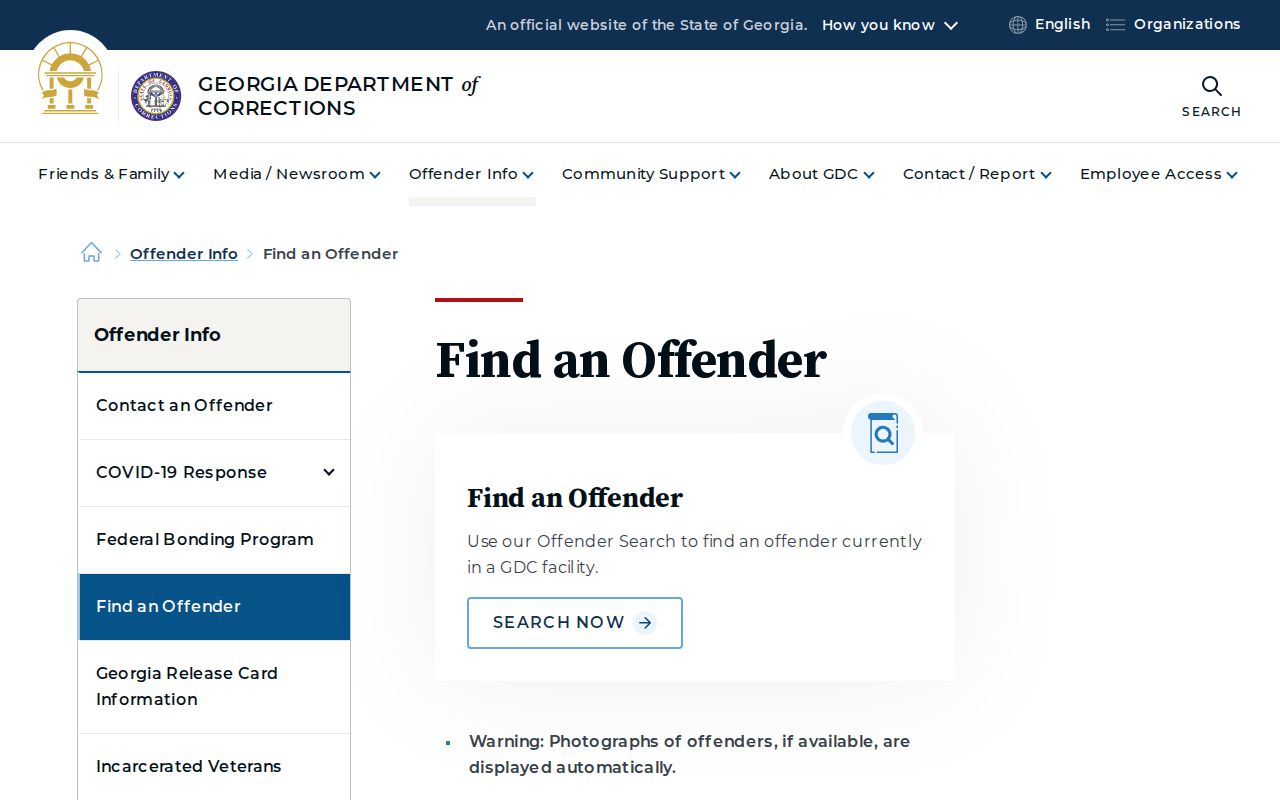
The state search concerns GDC custody. It does not calculate a Cherokee County jail release or replace the sentencing docket.
Cherokee County Sentence Credits
O.C.G.A. § 42-4-7 supplies the county rule. It states that a county inmate is released at sentence expiration less earned-time allowances. The practical calculation can reflect the imposed sentence, jail-time credit, earned time, non-running time, and lawful court or administrative changes. Cherokee’s public Jail List does not expose that calculation, so a name on the roster cannot reveal a reliable future date.
State prison computation uses different rules. Georgia Rule 125-2-4 defines the sentence begin date and sentence end date. The begin date can account for jail time served or special sentencing instructions. The end date reflects the maximum term plus non-running time and earned-time effects. A Cherokee sentencing document therefore remains important after transfer to GDC.
Note: County earned time and GDC sentence credits are separate systems, even when the conviction began in a Cherokee County court.
Cherokee GDC Computation Errors
GDC’s loved-ones material gives a specific correction route. If time appears miscalculated, the incarcerated person may speak with a counselor and use the grievance process if the issue remains unresolved. GDC also notes that the clerk in the county of conviction may need to address jail credit or sentencing documents. For a Cherokee conviction, that can make the local court file central to the state calculation.
The GDC release-date and computation explanation provides that workflow.
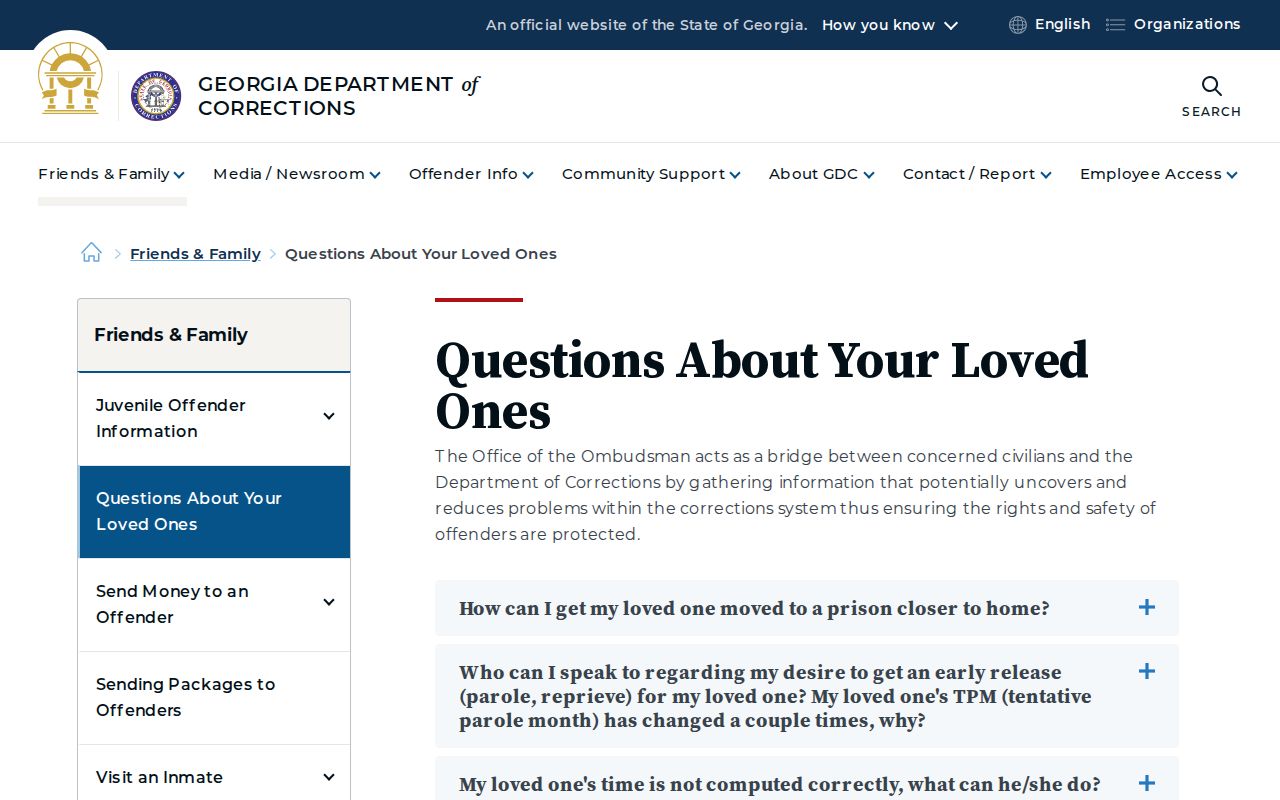
Compare the judgment, jail-credit entries, and GDC date before alleging an error. A mismatch may come from a later order, non-running time, or a document that has not yet been reflected.
Georgia TPM Is Not Release
A Tentative Parole Month is the month when the Board expects to complete final review and may set a parole release date. It is not a final parole decision. Good conduct and completion of required programs may be conditions. GDC misconduct reports can result in postponement or cancellation. A TPM must never be restated as a guaranteed day of release.
The Board’s TPM definition and caveats provide the controlling explanation.
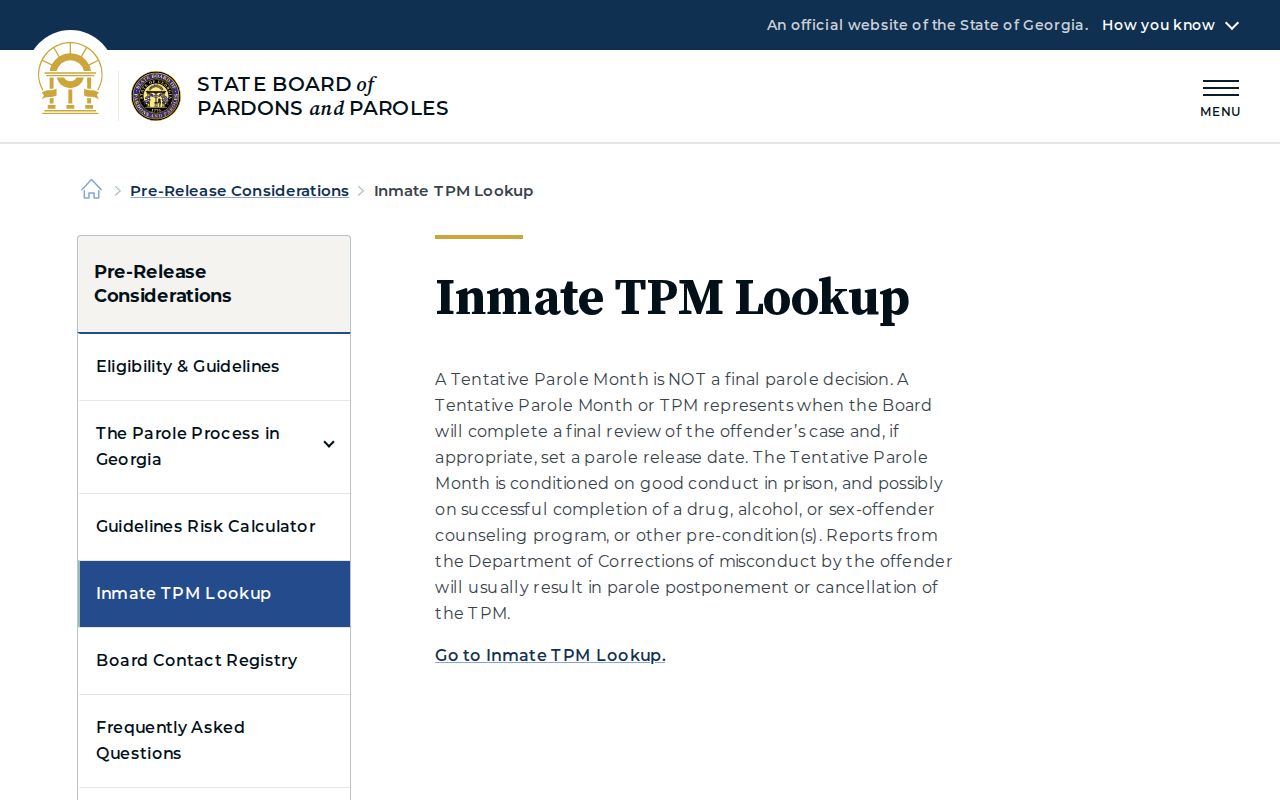
After actual parole release, the Parolee Database and DCS supervision records answer a different question. They can help confirm post-release parole status but do not turn an old TPM into proof of the release day.
- MRD
- Maximum Release Date in the GDC sentence computation.
- TPM
- Tentative Parole Month for Board review, not a final date.
- Parole
- Conditional release from prison under supervision.
- Non-running time
- Time that does not count toward the active sentence calculation under the governing record.
Cherokee Release Dates Can Change
Release timing can move for several documented reasons. Some changes shorten the current projection, while others delay it or replace it with transfer to another jurisdiction. The agency record should identify the change. A family estimate based only on the sentence length cannot account for every factor.
| Factor | Possible effect | Record to check |
|---|---|---|
| Amended sentence or jail-credit correction | Moves the computed begin or end point. | Cherokee court and GDC |
| Earned time or PIC | May reduce an eligible term, TPM, or MRD. | Jail or GDC program record |
| Disciplinary report | May affect credit or postpone/cancel a TPM. | GDC and Board record |
| Program precondition | Completion may be required before parole release. | Board decision information |
| Detainer or transfer | Ends one custody event but continues custody elsewhere. | Releasing and receiving agencies |
| Appeal, resentencing, or revocation | Changes the sentence or returns the person to custody. | Court and corrections records |
Absence from the Cherokee Jail List is not enough. It may reflect release, transfer, data lag, a name mismatch, or a hold handoff. Use the direction of custody to choose the confirming system.
Cherokee PIC Release-Date Reductions
Georgia’s release-date terms must stay distinct: county sentence expiration after earned-time allowances, the GDC MRD, and the Board TPM. The GDC Performance Incentive Credit Program can allow eligible offenders to earn up to twelve points and potentially reduce a TPM or MRD by one to twelve months through progress in approved programs, work, treatment, and conduct.
PIC does not apply to everyone. GDC identifies exclusions that include probationers, death-sentence cases, sentences of two years or less, non-parole-eligible or minimum-mandatory offenses, and life sentences. The GDC PIC program source explains the eligible reduction.
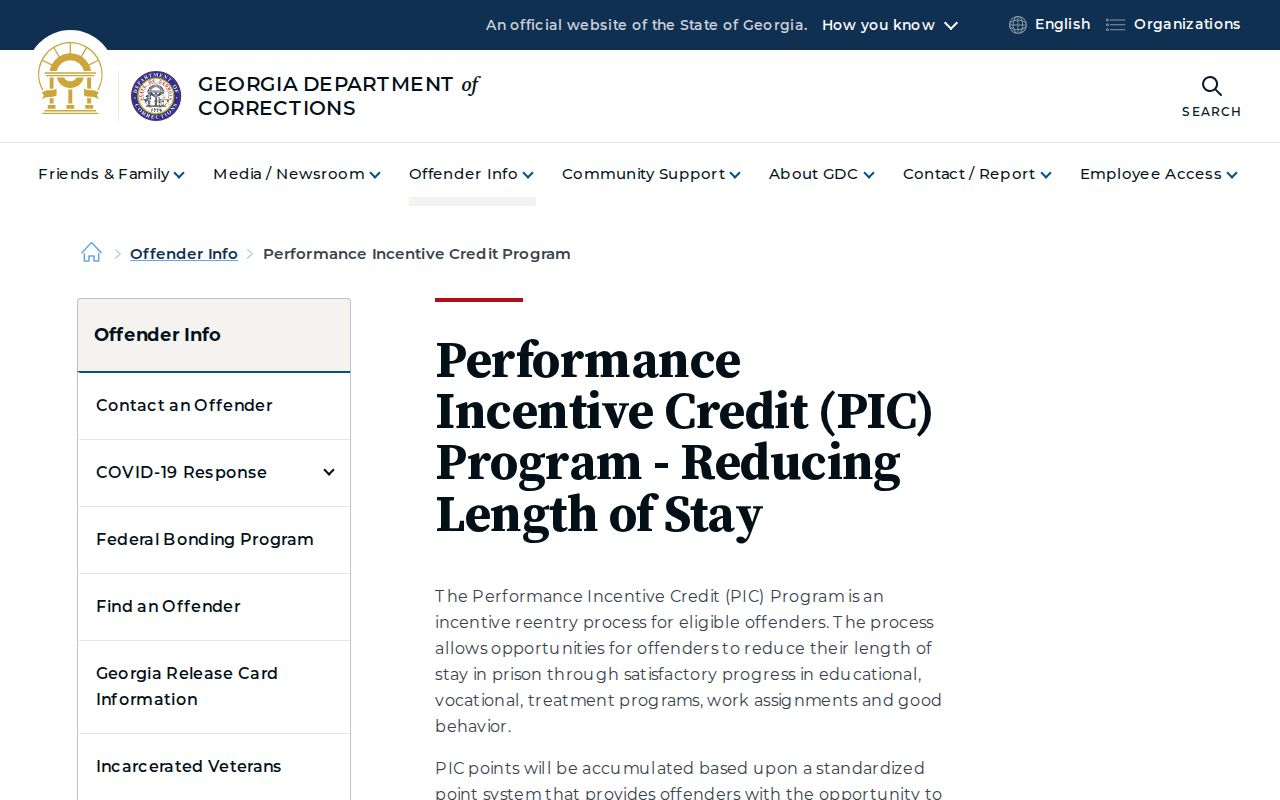
The program cannot be applied by assumption. Confirm eligibility and the credit actually awarded in the state record.
Cherokee Sentencing Has No Universal 85%
Georgia should not be described with a blanket rule that every person serves 85 percent. O.C.G.A. § 42-9-45 gives a general parole-consideration baseline for many felony sentences of nine months or one-third of the term, whichever is greater, while other statutes create exclusions. The Board notes that few people are granted parole at the first eligibility point.
O.C.G.A. § 17-10-6.1 and Board guidance address serious violent felonies. Certain non-life sentences for covered crimes committed on or after January 1, 1995 are not eligible for parole consideration. Recidivist, mandatory-minimum, and life-sentence rules also matter. Check the conviction, offense date, sentence, and governing statute. Do not turn a broad slogan into a release prediction.
For final confirmation, check the holding agency near the expected date and use custody-change alerts as a supplement. The Cherokee VINELink check explains notification registration, while the agency release record establishes what actually occurred.
Cherokee Parole Eligibility Dates
Eligibility is only the point when the Board may consider parole. It is not the day a person leaves prison. O.C.G.A. § 42-9-45 gives the general baseline of nine months or one-third of the felony sentence, whichever is greater, for many eligible cases. Board guidance adds that few people receive parole at the first eligibility point. A TPM may be set later, changed during review, or never lead to release.
Several categories follow different rules. Board materials identify non-life sentences for certain serious violent felonies committed on or after January 1, 1995 as ineligible for parole. Fourth-or-more felony recidivist sentences and life without parole also fall outside the ordinary path. Life-sentence eligibility for serious violent offenses varies by offense date. The record must be checked against the actual conviction and sentence instead of a general formula.
| Date concept | What it starts | What it does not guarantee |
|---|---|---|
| Parole eligibility | The point when consideration may be legally available. | A Board grant or a release date. |
| TPM | The expected month for final Board review. | Release in that month. |
| Parole release date | The scheduled start of parole after a grant. | That no later rescission or hold can intervene. |
| Parole begin date | Post-release evidence in parole records. | Completion of supervision. |
A parole grant can also carry a program precondition. Misconduct or failure to complete the required program may postpone or cancel the tentative plan. Read the latest Board record, not a date copied from an older search.
Confirm Cherokee Projected Release Dates
Near the expected date, return to the agency that holds the person. For county custody, the Cherokee Sheriff’s jail records unit can address the local sentence and actual release event. For state custody, GDC controls the computation and facility status. The Board controls parole decisions, while DCS becomes relevant after a person is released to state parole supervision.
Save the date of each lookup and the identifier used. A GDC ID, booking ID, or case number is more reliable than a name alone. If a court amendment or jail-credit correction appears after an earlier search, compare that document with the later agency result. A custody alert may provide quick notice, but the final release record is still created by the releasing office.
A detainer can change the meaning of “release.” The person may leave GDC or Cherokee custody and enter another jurisdiction’s custody on the same day. Ask for the transfer destination when the expected community release does not match the observed result. This separates an actual discharge into the community from the close of only one agency’s custody segment.
Note: Confirm the person’s status again on the expected date because a projection can change until the holding agency completes release.