
Cherokee 72-Hour Release List
No distinct official Cherokee County 72-hour release archive was verified on the sheriff pages reviewed on July 15, 2026. The available online tool is the current Jail List. It searches people now listed at the Adult Detention Center, not all people who left during a rolling three-day period. This absence is important. A list from another county, an unofficial repost, or a current roster relabeled as “72-hour releases” would not answer the Cherokee question.
A three-day check is still possible, but it uses several records. Start with the current roster to see whether the person remains listed. Then use Georgia VINE for a custody-change clue. Search the Cherokee court docket because bond orders, first-appearance entries, charging documents, and early case events may have posted by the second or third day. Sheriff records provide the exact local release date, time, and reason. If the departure was a transfer, the receiving agency becomes the source for later custody.
Check Cherokee Three-Day Releases
Use the three-day span as a research window, not as a claim that the sheriff stores released names online for 72 hours. The official pages do not state how long a person remains visible after release or whether old roster entries are archived. Keep the last known booking details close at hand. A booking ID, date, arresting agency, and case number can separate people with similar names and link the jail event to a court file.
- Search the current Cherokee Jail List with each known form of the name.
- If the person is absent, check Georgia VINE for a custody status or notification event.
- Search the Cherokee Clerk docket by party name or case number for activity across all three days.
- Follow a state-prison commitment into GDC or a hold into the agency that received custody.
- Request the sheriff release record when the exact date, time, reason, or destination is needed.
For activity limited to today, the Cherokee County 24-Hour Release List uses a tighter same-day workflow. The three-day method places more weight on court updates and transfer follow-up because more time has passed since the possible jail departure.
The official current Jail List results endpoint is the roster source used at the first step.
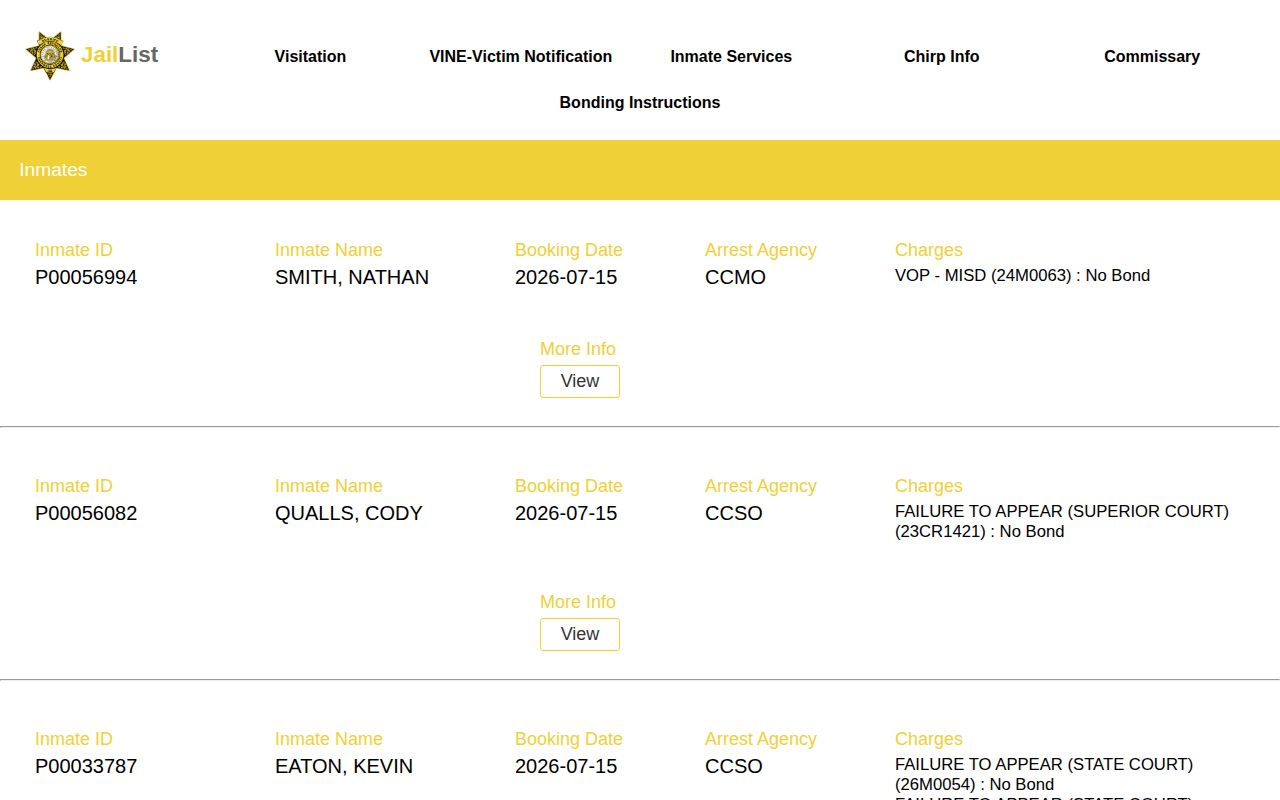
Its current fields help identify the booking, but they do not create a three-day release archive.
Cherokee 72-Hour Release Fields
The official current results source verifies five public fields: InmateId, BookingId, Name, BookingDate, and ArrestingAgency. It does not verify a public release date, release time, release reason, or releasing facility field in a 72-hour feed. That difference should remain visible. The current fields identify the booking; the missing fields are what a release record must supply.
| Field | What Cherokee publishes online |
|---|---|
| Inmate ID | Identifier in the current Jail List results |
| Booking ID | Identifier for the current booking event |
| Name | Name attached to the current entry |
| Booking date | Date the current booking began |
| Arresting agency | Agency tied to the current booking |
| Release date and time | Not verified in a public 72-hour feed; request the release record |
| Release reason or transfer | Not verified in the current list; check sheriff and court records |
A true jail release record can distinguish bond, time served, sentence completion, dismissal, probation, and transfer. The same roster absence can result from any of those events. If GDC, another county, BOP, USMS, or ICE received the person, the county departure record and the receiving record must be read together.
Note: The reviewed sheriff pages state no online retention period for released entries and no fixed Jail List update schedule.
Cherokee Weekend Release Checks
A 72-hour span is most useful around a weekend because it gives court systems and records offices more time to reflect the event. Magistrate Court handles initial appearances and bail hearings for every person booked into the Adult Detention Center, including after-hours hearings. A bond decision may occur before the complete online docket catches up. By the next business day, the docket may show an order, court assignment, or early case event that was not easy to find during the same-day search.
The court record explains legal authority, while the sheriff record documents when physical jail custody ended. Those times may differ. Bond paperwork can precede release processing. A court order may also coexist with another agency’s hold. For that reason, a weekend docket entry should be treated as an explanation rather than proof that the person walked out at that moment.
The Cherokee Clerk case search allows searches by case number, party name, or CSE number.
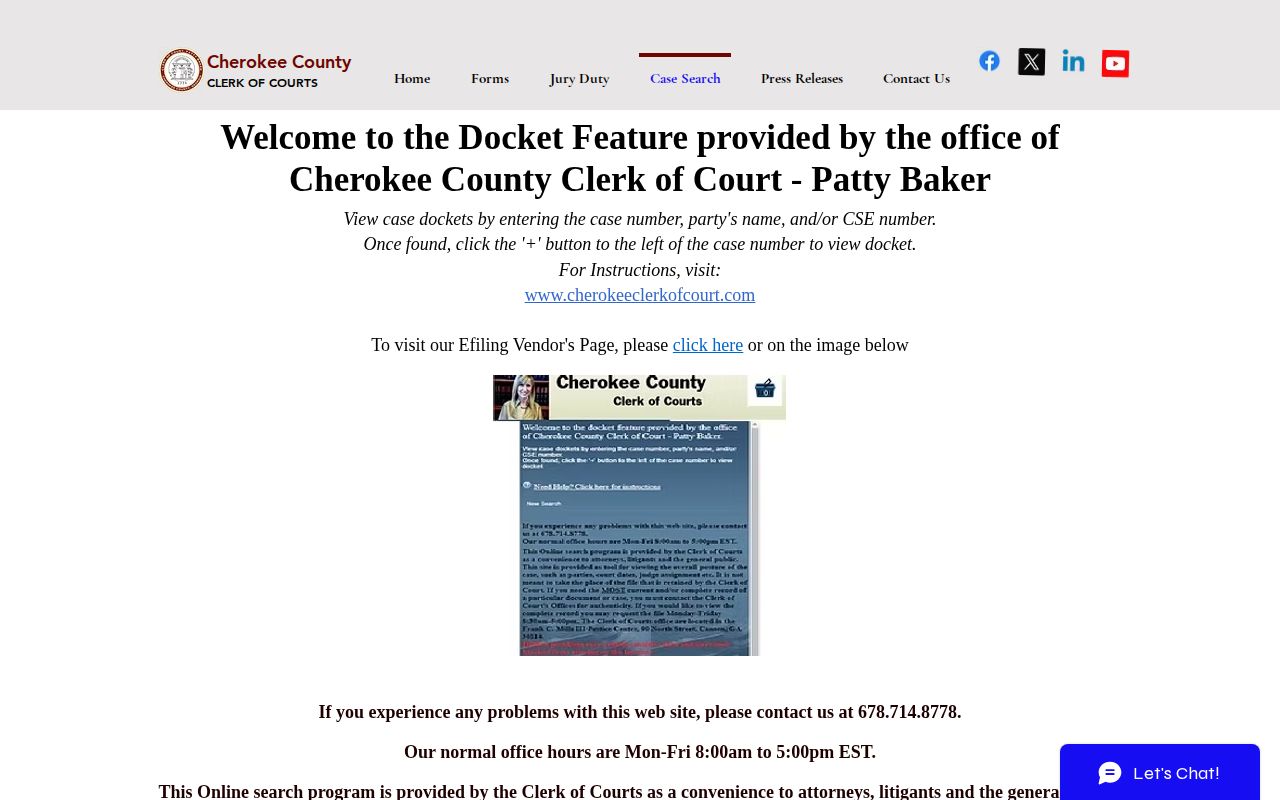
The docket can reveal bond, sentence, probation, dismissal, or commitment activity after a weekend, though a complete file may still require a clerk request.
Why Cherokee Release Names Vanish
The Cherokee Jail List disclaimer describes a changing current-custody source. It says the data is informational, subject to change, updated periodically, and may contain errors or fail to reflect current information because inmate facts change quickly. An absent name is useful evidence that the current view changed, but it does not prove the reason or establish a release during the three-day window.
Several events look alike from the outside. The person may have bonded out, completed local time, received time served, or left after a dismissal. The jail may also have transferred the person to GDC, another county, federal authority, or immigration custody. A name mismatch or delayed update can produce another false signal. The solution is to match the absence to VINE, the court docket, sheriff records, and any receiving agency.
The three-day view should not be confused with a photo archive either. The reviewed roster source did not prove a released-booking-photo archive. No Cherokee sheriff mobile app publishing recent releases or mugshots was verified in the official pages reviewed. Use the live official tools and the records process instead of assuming such a feature exists.
Note: A three-day search gains context from later records, but it does not turn the current roster into release history.
Request Cherokee Release Records
When the exact release date, time, reason, or transfer destination matters, use the Cherokee Sheriff’s open-records route. The records page lists 678-493-4140 for incident-report requests on weekdays from 8 a.m. to 5 p.m. It also links to the county NextRequest portal and cites the Georgia Open Records Act. A narrow request is easier to identify and review than a demand for every record about a person.
Include the full name, date of birth if known, booking date, booking ID, and the three-day period in question. Ask for the booking and release sheet, release date and time, release reason or type, bond or transfer entry, and any hold-release entry. If a transfer is shown, ask for the releasable destination. The custodian may redact protected material or cite a legal exemption for withheld parts.
The Sheriff Records and Open Records page is the official fallback for this historical release detail.
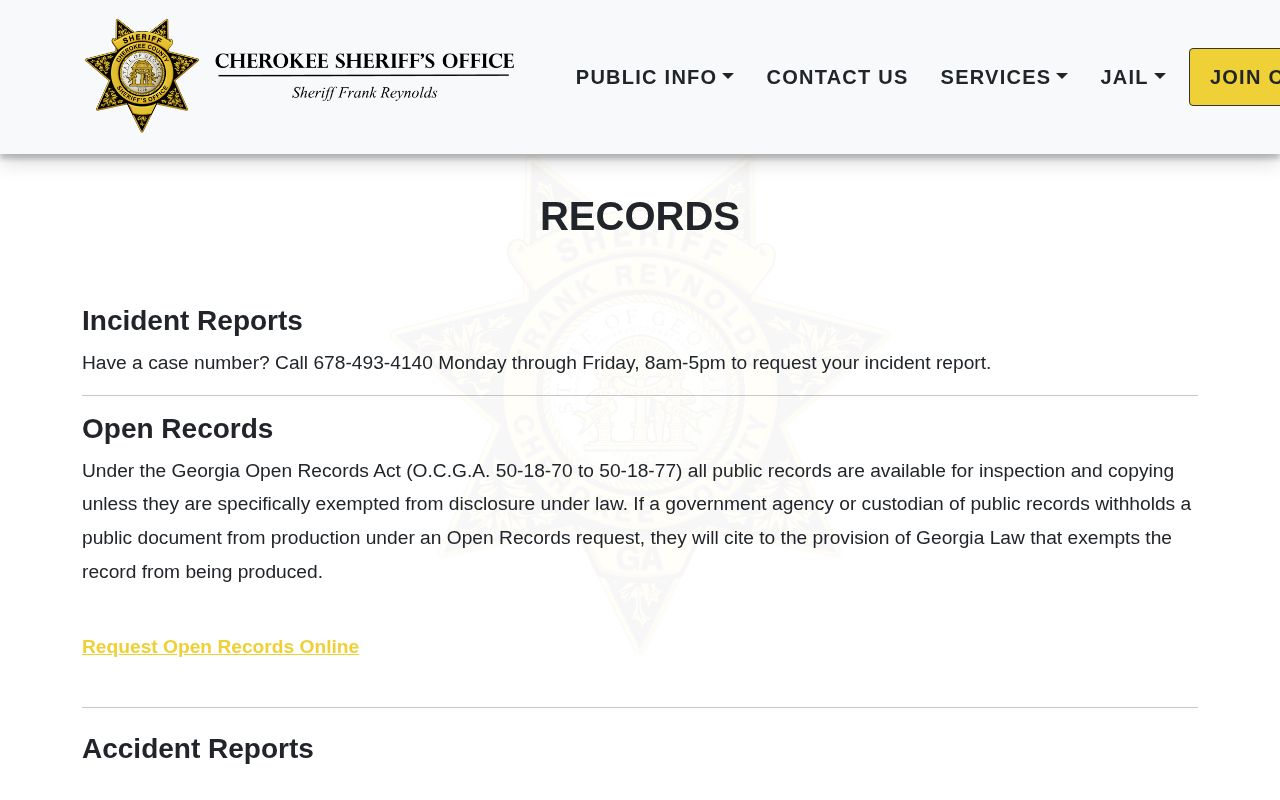
This request route supplies fields that the current Jail List and nonexistent three-day feed cannot provide.
Cherokee Transfer Release Checks
Custody type controls the last step. A person transferred from the Cherokee jail to GDC remains incarcerated even though the county roster no longer shows the booking. Confirm the state sentence in the court docket, then use GDC Find an Offender for the prison location and state release-date information. A person released on parole moves into a different state system, with the Board’s parolee search and DCS handling post-release supervision.
A hold or extradition can lead to another county or agency. Cherokee Warrants & Civil places and releases holds and arranges felony extraditions. Federal custody requires BOP or USMS sources, depending on whether the person is sentenced or held before trial. An immigration handoff requires ICE’s locator plus releasable sheriff transfer records. None of these routes is established merely by absence from the local Jail List.
The Cherokee Warrants & Civil page provides the official hold and extradition context.
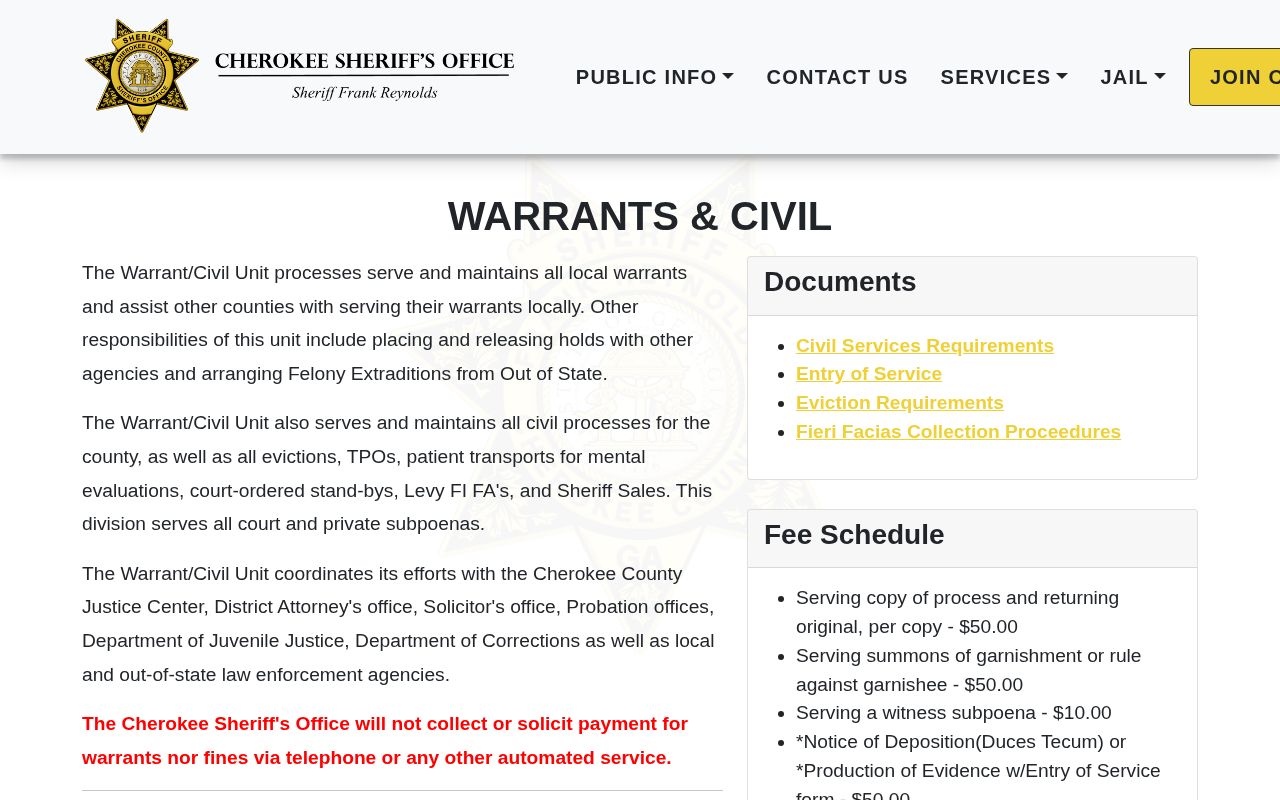
That record path is essential when the three-day search shows a local departure but not release into the community.
Read Cherokee Release Results
Use the sources as a timeline. The roster establishes whether a current jail entry appears. VINE can flag a custody change. A court docket can explain the bond, sentence, dismissal, probation order, or commitment. Sheriff records certify the local booking’s end details. A receiving agency then establishes continued custody or later release after a transfer.
A named-person search across all custody systems is covered in the Cherokee County released inmate lookup. A three-day release check has a narrower aim: identify each person who may have left local custody during the period and confirm the event rather than counting missing roster names as releases.
- Current roster
- A list of people now shown in jail custody, not release history.
- Release record
- The jail entry documenting when and how its custody event ended.
- Transfer
- A move into another agency’s custody rather than community release.
- Hold
- A legal or agency basis that may continue custody after the local case changes.