
Cherokee Released Mugshot Records
A booking photo is made during an arrest and booking event. Release ends custody, not necessarily the existence of the record. Yet the public current Jail List is not the same as a photo archive. Cherokee’s roster exposes fields such as inmate ID, booking ID, name, booking date, and arresting agency, but it does not establish a public gallery that retains images after release.
Georgia law requires caution. The state open-records framework contains special treatment for booking photographs, and a custodian may redact, apply an exemption, or deny a request under a cited law. A public arrest record does not guarantee that every image is posted online or released on demand. Start with official sources and ask for the precise image tied to the correct booking.
Find Cherokee Released Inmate Mugshots
The best channel depends on where the person was held and why an image exists. A Cherokee booking photo belongs to the sheriff’s booking record. A GDC photo belongs to a state corrections record. A registry photo belongs to a statutory registration entry. An official news image may be tied to one incident. Those images should not be treated as interchangeable.
| Channel | Has a photo? | How to access |
|---|---|---|
| Cherokee current Jail List | Check the live display; no released-photo archive was verified. | Search the current roster by name. |
| Sheriff records request | Possibly, subject to Georgia booking-photo rules. | Request the specific releasable photo by booking ID and date. |
| GDC offender search | Offender photos display automatically when available. | Use only for a Georgia state corrections record. |
| GBI registry | May show a public registration photo. | Use only when a registration duty applies. |
| Cherokee local registry | May show a local registrant photo. | Use the sheriff-linked OffenderWatch route. |
| Official news or social release | Sometimes, for an individual case. | Search the agency’s case-specific releases. |
| Third-party mirror | May retain an old image. | Treat as unverified and return to official records. |
VINELink is a custody-status and notification service, not a dependable booking-photo archive. The official Cherokee sheriff pages identify no mobile app that publishes recent releases or mugshots. Do not invent one or substitute an app from another county.
Cherokee Jail Photo Limits
The official Cherokee Jail List is built for current custody. A person who has left the Adult Detention Center may disappear from the live roster, and the official pages do not state a retention period for old entries. Absence can also result from transfer, a name mismatch, data lag, or a receiving-agency handoff. It is not proof of a particular release reason.
The Cherokee current Jail List results provide the live roster source shown below.
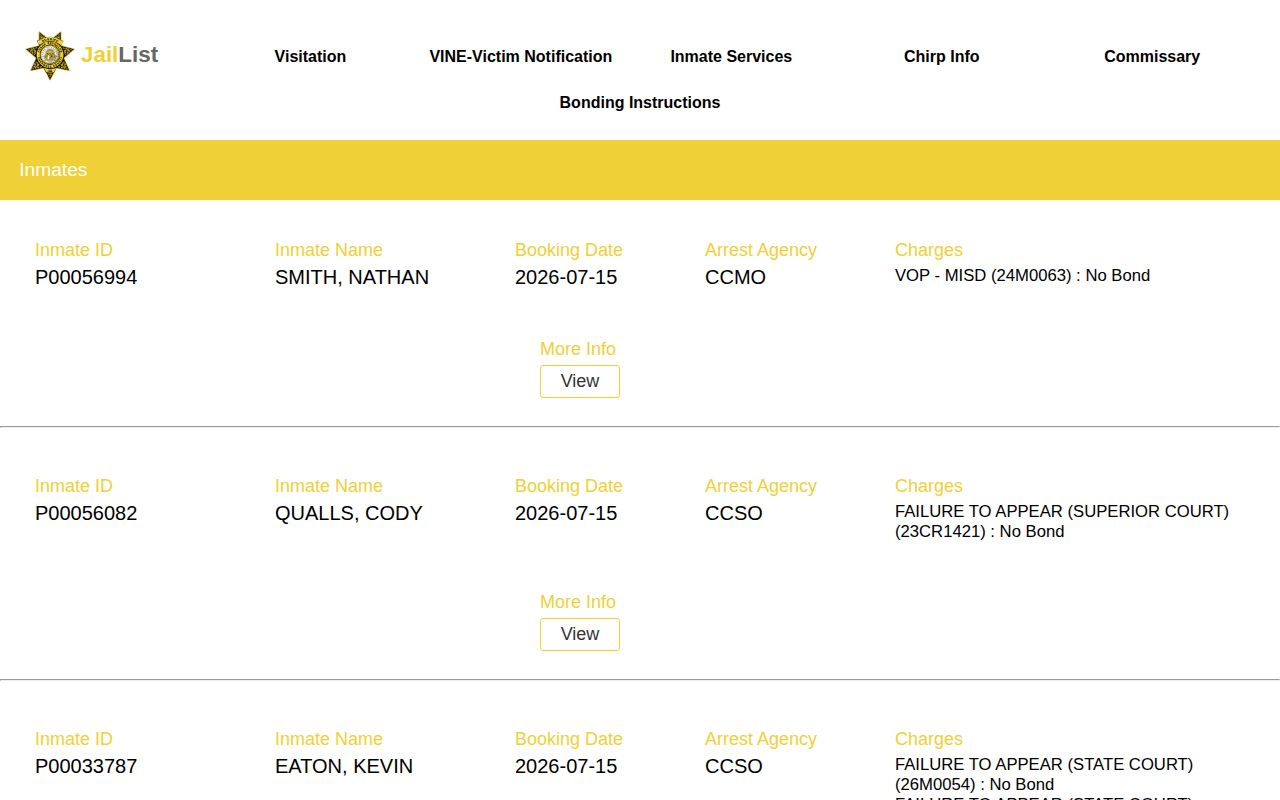
The screen should be checked visually when the person is still listed. For a past booking, move to the sheriff’s records process rather than assuming the current list keeps an archive.
Official sheriff social accounts and press material can carry an arrest or incident image in a major case. That is case-specific publication, not full coverage. A photo in a release also may differ from the jail booking image.
Request Cherokee Booking Photos
The sheriff’s Records/Open Records page is the local fallback. A narrow request is easier to identify than a demand for every related file. Include the full name, booking date, and booking ID when known. Ask for the releasable booking photograph from that event. If release confirmation is also needed, request the release date, time, and type as separate fields.
- Search the current Jail List and note the exact name, booking ID, and booking date shown.
- Open the sheriff’s Records/Open Records page or the Cherokee County NextRequest portal.
- Describe one booking event and ask specifically for its releasable booking photograph.
- State that a cited redaction or exemption response is acceptable if the image cannot lawfully be released.
- Keep the agency response with the image so its source and limits remain clear.
The Cherokee Sheriff’s records-request source is shown below.
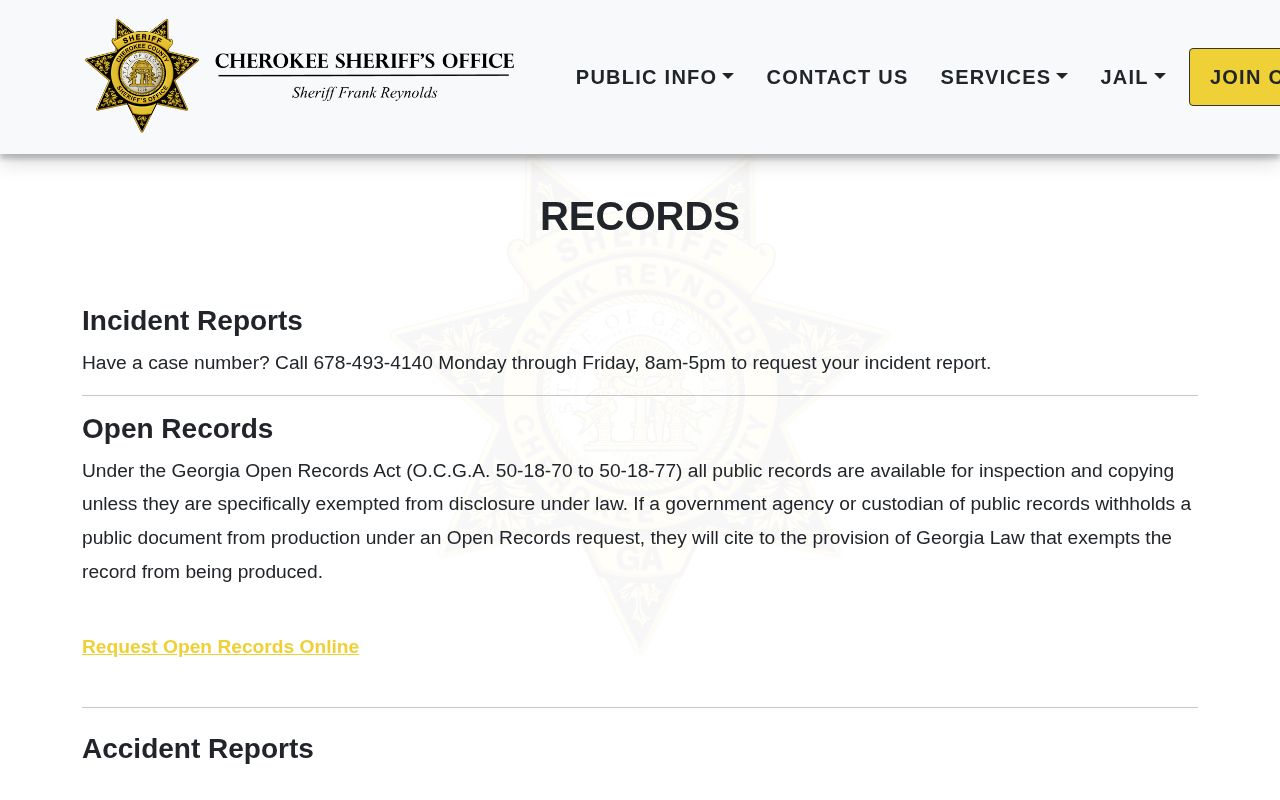
Georgia’s Open Records Act allows inspection and copying of public records unless an exemption applies, but booking photos receive special statutory treatment. Availability should never be promised before the custodian reviews the request.
Cherokee GDC and Registry Photos
When a Cherokee case led to a state prison term, GDC becomes a separate official image source. The GDC Find an Offender page says photographs display automatically when available. That is an offender photo attached to a state corrections record, not the Cherokee jail’s booking photograph. Use the accompanying GDC ID, facility, and release information to confirm the correct state record.
The GBI Sex Offender Registry is narrower still. It may publish a current registration photo and address for a person required to register under Georgia law. The registry must not be used as a general released-inmate search. Most released people are not registrants. Cherokee also links to a local SheriffAlerts/OffenderWatch route for local registrants.
The GBI registry search and photo path provides an official example.
The image belongs to the registry entry. It does not prove when the Cherokee jail released the person or whether parole or probation remains active.
Where Cherokee Mugshot Sources Differ
Cherokee has no verified released-mugshot gallery on its official pages. The live roster may show current booking material, the sheriff can review a booking-photo request, GDC may show a state offender photo, and a registry may show a registrant photo. Each source answers a different question and has its own update cycle.
| Image type | Record purpose | Release meaning |
|---|---|---|
| Cherokee booking photo | Documents a county booking. | Does not itself show that release occurred. |
| GDC offender photo | Identifies a state corrections record. | Must be read with the GDC status and date. |
| Registry photo | Identifies a public registrant entry. | Shows registration, not a universal release status. |
| Official news image | Illustrates one agency announcement. | May predate disposition or release. |
Commercial galleries and data mirrors can be old, incomplete, or detached from the outcome. They may be mentioned as a category because an old image can surface there, but no such service is linked or endorsed. Return to the sheriff, court, GDC, registry, or other originating office to verify the record.
A source can also reuse an image from an earlier event. Compare the booking date and agency before assuming that a photo belongs to the release now being checked. The same person may have more than one booking image, and a GDC or registry photo may have been created after the county arrest.
Note: A photo can remain online after custody ends, so check the release record separately from the image source.
Cherokee Mugshot Restriction Effects
O.C.G.A. § 35-3-37 governs restriction of eligible criminal history information. Cherokee’s local page distinguishes arrests before and after July 1, 2013. For older arrests, the process can begin with the arresting agency and may involve prosecuting-attorney approval. For later arrests, prosecutor approval may occur at sentencing, with sentence-completion approval reflected in material sent to the court.
Restriction is not the same as physical deletion from every source. Cherokee’s own material warns that information may remain available from sources outside GCIC control. A restricted state criminal-history entry does not automatically erase an official news post, court docket, saved copy, registry duty, or third-party mirror. No broad removal promise is supported.
The official Cherokee criminal record restriction page provides the local process. Ask each official custodian how an approved order affects the specific image it controls. If a site did not create the public record, its response cannot bind the sheriff, GDC, GBI, court, or another publisher.
An approved restriction also does not answer whether a booking photograph falls within a separate access limit. Provide the order to the office that holds the image and ask for its written response. The court, sheriff, GDC, GBI, and a news publisher each control different records.
Verify Cherokee Mugshot Context
A mugshot does not state disposition. A person can be booked and later released on bond, sentenced to time served, transferred, placed on probation, committed to GDC, or have charges dismissed. The Cherokee court docket supplies the case posture and later orders. The sheriff’s release record supplies the end of the county custody event.
Use a short source chain. Match the photo to the booking ID and date. Confirm the current custody or release status through the holding agency. Review the court docket for disposition. If the person entered state prison, check GDC. If a registration duty applies, treat the registry as a separate post-release record. The Cherokee County released-inmate lookup explains those custody channels in full.
- Booking photo
- An image created during intake for one arrest event.
- Disposition
- The court outcome or current procedural status of the charge.
- Record restriction
- Georgia’s process for limiting access to eligible criminal history information.
- Release record
- The agency record showing when and how a custody event ended.
No photo should be used to infer facts that its source does not state. Verify the named person, record date, agency, and current status.
Cherokee Mugshot Date Checks
The date beside an image can refer to booking, publication, an agency update, or registration. Those are different events. Record the label exactly and compare it with the booking ID, court case, and release sheet. An image published after release may still depict the earlier booking, while a registry photo may have been updated long after the jail event.
When two official images differ, prefer neither by age alone. Identify which agency created each one and what record it serves. Ask the custodian about a missing or unclear date. This helps prevent an old Cherokee booking photo from being mistaken for a new arrest or a state offender image from being described as the county mugshot.
Note: Keep the image source, record date, and custody source together so the photo is not separated from its actual context.